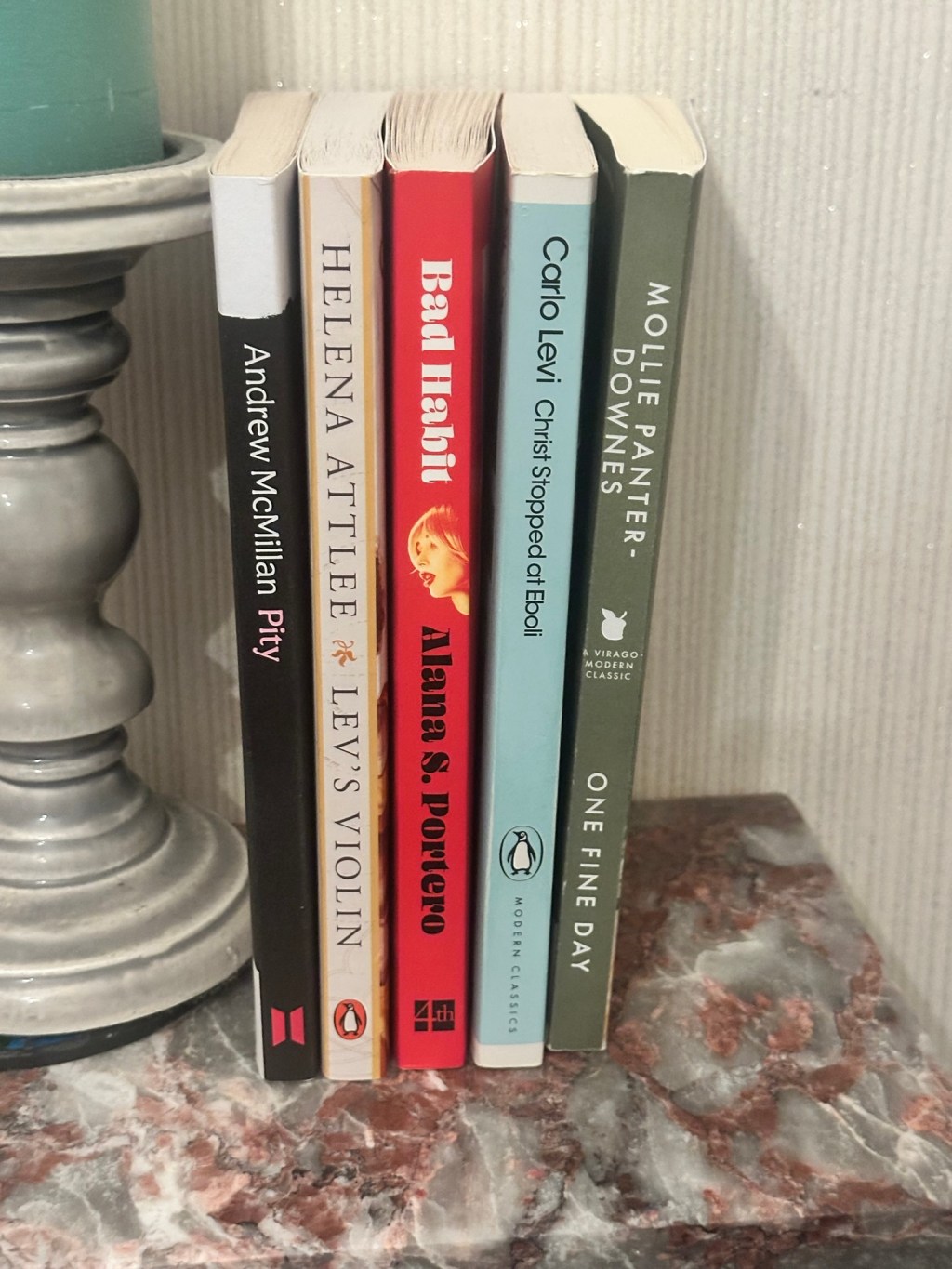
How exactly do you choose “the best” out of a random selection of books that caught your fancy in a given year? Do you choose the award winners? The ones adapted for film? The ones the critics adored?
Well, as you’ve probably guessed, none of these criteria were used in selecting the following. I’ve chosen the books that a) I loved best, and b) which made the greatest impression upon on me. It’s unabashedly subjective, but I hope you’ll find it intriguing at the least. And without further ado…
- One Fine Day by Molly Panter-Downes
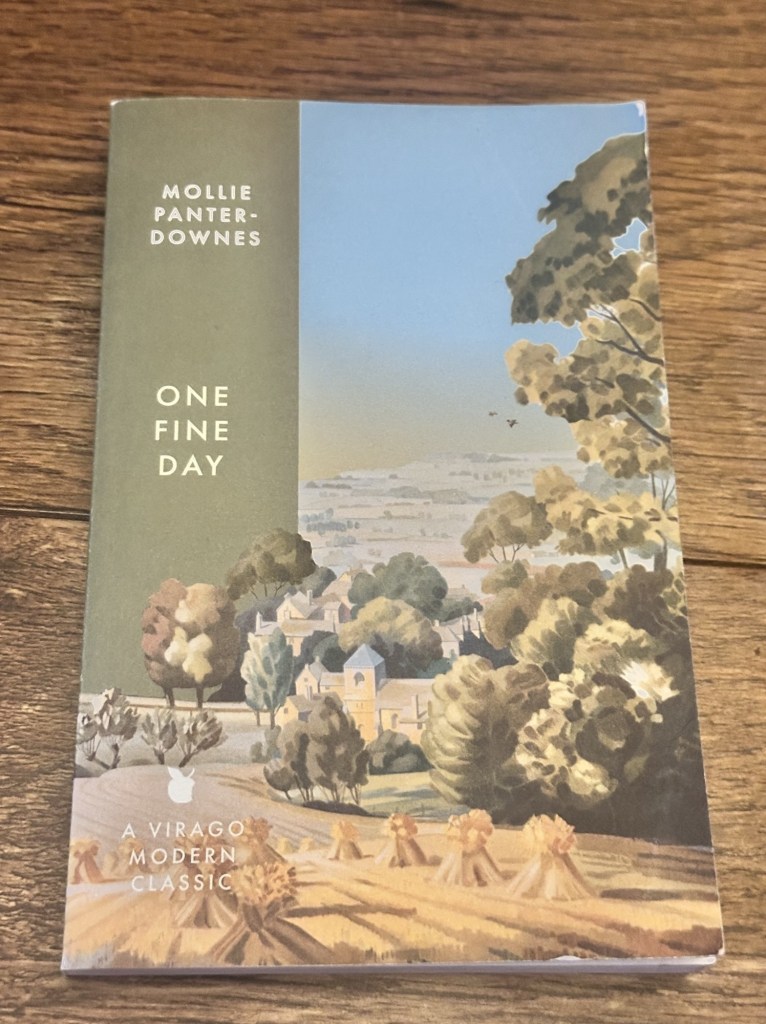
It is the summer of 1946. The Second World War is over. The Allies have won, and a new era of peace beckons. But traces of the war linger like cobwebs, and its effects are both profound and all-encompassing.
Panter-Downes sets her novel during the span of a single summer’s day, blisteringly hot and suffused with greenness, with rampant life, with relief. Then she narrows the scope even further, by centring her story on the Marshall family: wife Laura, scatty but wiser than her husband Stephen, long absent with the army and struggling to accept that his life has changed irrevocably, and daughter Victoria, who remembers little of pre-War life. The novel follows Laura over the course of the day as she attempts (and fails) to recruit a gardener, does the shopping and searches for the family dog. Stephen goes to work and returns to tackle the overgrown garden. Victoria attends school.
That’s it. That’s the book. There is no plot as such. Yet, although the setting and the cast of characters is comparatively small, the novel’s themes are anything but. For all its lightness, the novel touches upon a moment of real social change. The Marshalls are an upper-middle class family, accustomed to servants taking care of life’s donkey work such as washing up, weeding, cooking, dusting, raising their child. All right, that last one is a bit facetious, but before the War Victoria had a nanny who would present the child to dear Daddy, clean and tidy and well-behaved, for a goodnight kiss. Stephen’s parenting didn’t seem to extend much further. But when the story begins, nanny is long gone, Victoria has grown from a sweet little moppet into an opinionated girl of ten and she and her father are comparative strangers.
Likewise, the Marshall’s cook died in an air raid, the gardener was killed in Holland, and their maids have decamped for better-paying jobs in factories. Everywhere you look, the established social order is being chiselled away. The “big house,” the local Downton Abbey, is being sold to the National Trust because the aristocratic owners can’t afford to run it any longer. The young working-class man Laura offers the post of gardener to turns it down – he’s got a job in a garage lined up, a job with “prospects.” He brings his nephew out for her inspection while she’s there. The baby is the illegitimate offspring of a Polish officer, and Laura marvels at the thought of the child’s connection with a foreign land after generations upon generations of his family have spent their entire lives in the village.
I won’t offer any more examples, but the whole novel is filled with change, with the sense that the world is moving on, that things can never be as they were. It is a truth that Stephen (and Laura’s mother) is struggling to accept. Their plan was for Victoria to be a lady, to have “accomplishments,” to marry well. But Laura can see, as Stephen cannot yet, that Victoria will have to work for a living. And she knows full well that there will be no more gardeners and maids to shoulder the running of the house, no matter how many adverts Stephen has her put in the newspaper.
But for all this, One Fine Day is not a depressing book. Quite the opposite: Laura’s joy and optimism are boundless as she realises that she and her family have survived the War. And Laura is coming to believe that keeping up appearances isn’t as important as her mother and Stephen still seem to think. She muddled through the War, she can muddle through peacetime too. Even Stephen, by the close of the book, has a moment of self-awareness in which he reflects that it was ridiculous to be so dependent on servants. The family has survived; it is a glorious summers’ day, the world and the future await. The sense of relief that the novel conjures, in my opinion, could only have been summoned by a survivor of the War, and it is palpable.
One Fine Day is not so much a conventional plotted novel as an impression of a time and a place, captured and crystalised like a drop of amber. I’ve noticed that in recent years there seem to be a growing number of books and films that, rather than focusing on the Second World War, explore what life was like immediately after the War. The Guernsey Literary and Potato Peel Pie Society, Bookish, Small Island, even more fantastical works such as Pat Barker’s The Voyage Home or This Rebel Heart by Katherine Locke. My own theory is that as we try to reestablish ourselves and come to terms with the changes in the world post-Covid, we are turning to examine how people coped in the aftermath of another, different global upheaval. We could do much worse than turn to One Fine Day as a guide.
2. Christ Stopped at Eboli by Carlo Levi
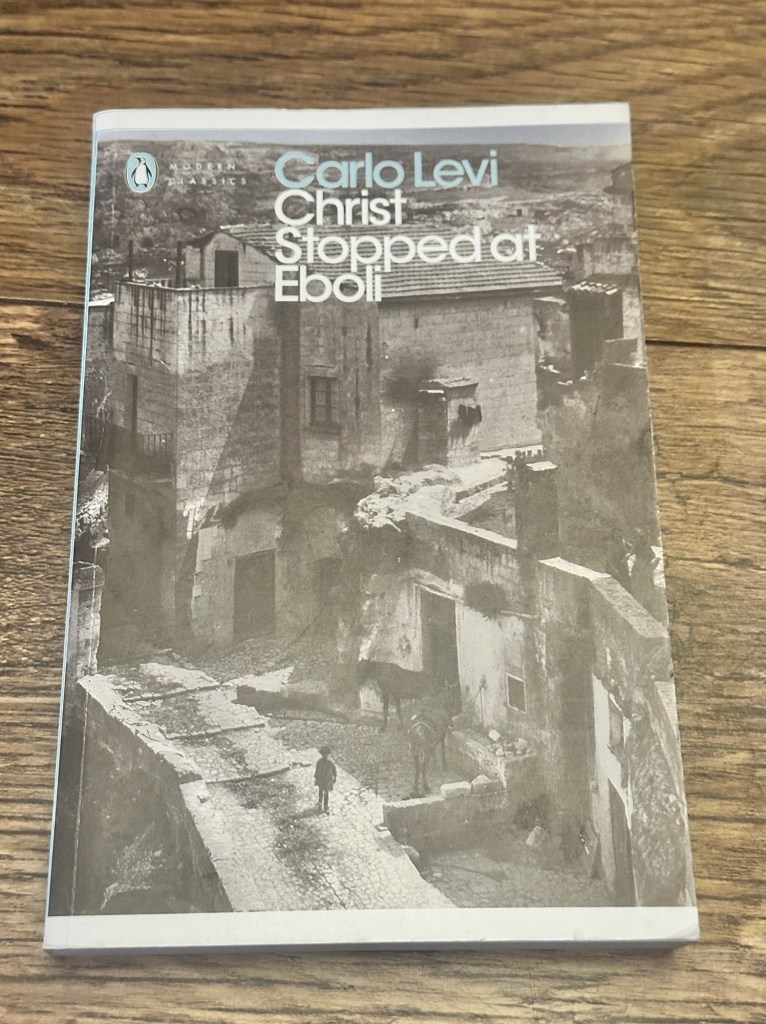
Is it possible to be an exile within the borders of your own nation? Carlo Levi ponders this question and many others in this searing account of his enforced stay in the village of “Gagliano” (an amalgamation of the towns of Grassano and Aliano) in Southern Italy. Levi lived there from 1935-36, as punishment for his opposition to the fascist regime of Benito Mussolini. Levi, a cultured man, a philosopher, a political activist, a trained though not practising doctor, finds himself in a new world. It is a world utterly untouched by modernity, where life has remained unchanged since the Dark Ages, where poverty is absolute and where the inhabitants believe themselves to be somewhat less than human. Christ, after all, never visited them. He stopped at Eboli.
Italy in the 1930s was a country swept up in the hysteria and false promise of fascism, clutched in the adamantine grip of Il Duce. The Second Ethiopian-Italo War commenced in 1935, with Italy the aggressor, part of Mussolini’s efforts to create a second Roman Empire (and to distract from serious economic troubles in Italy). But all this hasn’t passed Gagliano by so much as occurred on another plane of existence. Christ is said to have stopped at Eboli because that is where the railway from the North ends. Anything beyond doesn’t impact or truly concern the inhabitants of Gagliano. Their entire beings are invested in surviving, day-to-day, in this arid, pitiless land. Their souls must take care of themselves. They have enough to do keeping their bodies going. When the spiritual does intrude upon their lives, it is in the form of superstition and magic rather than organised religion.
Levi passes a year in this district, observing his neighbours, their feuds and friendships, their beliefs and the deadening, draining effect life in the region has on people. I was reminded in a strange way of a book by another Levi: If This is a Man by Primo Levi (no relation) an Italian who was interred in and survived Auschwitz. In the course of the book, which details his experiences in the camp, Primo Levi explains why none of the men imprisoned there revolted. To revolt, he explains, to rebel against injustice, you must be a human. Auschwitz was designed to strip away every last shred of humanity, to reduce its inmates to brute beasts, who labour and eat and sleep and suffer and fall ill and die and have no energy, no thought to spare on anything that might remind them that they are human.
Whilst not technically prisoners, the people of Gagliano seem born to be beasts rather than men and women. Families live in the same room as their animals, malaria and dysentery are rife, the local priests are corrupt and utterly uninterested in the welfare of their parishioners, running water and electricity are vague, fantastical dreams and all the modern state has done for the people is start wars for its few young, healthy men to die in. Levi recounts it all in this book, a remarkably well-written one considering it was his first.
In spite of the subject matter, this is not a depressing book at all. Instead, it’s a fascinating study of people in the worst of circumstances and how they adapt and manage. It’s also about the sheer incompetence and ignorance of fascist Italy and the pompous petty bureaucracy that hampered anything resembling progress. Levi himself escaped after a year, when his sentence was commuted after Italy declared victory in the war with Ethiopia and a fit of fascist goodwill allowed some dissidents to be pardoned, or at least brought back from exile. But he never forgot the people he lived with for that strange, difficult year, and his affection for them never diminished. His final request was to be buried in Aliano, a request that was honoured. Levi left behind him this remarkable book, and I suspect that were you to read it, its memory will remain with you just as Levi’s own experiences remained with him.
3. Bad Habit by Alana S. Portero, trans. Mara Faye Lethem
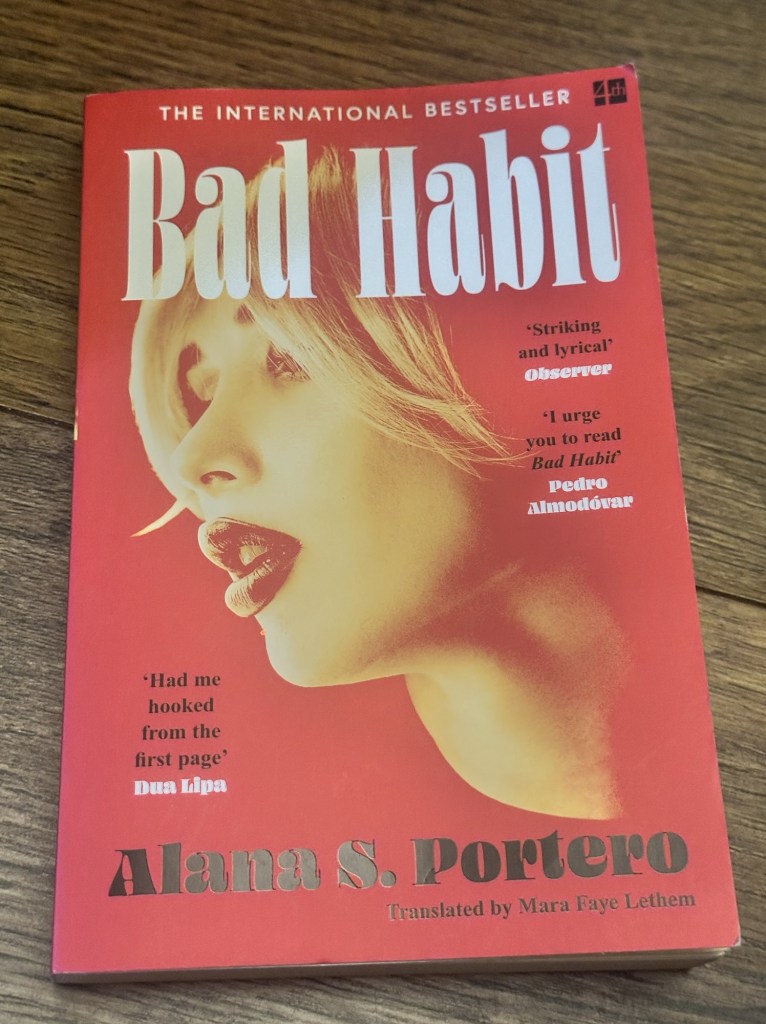
Have you ever visited Daunt Books in Marylebone, London? It is an independent bookstore, situated in elegant premises, adorned with an academic aesthetic – think dark woods, stained glass, plenty of staircases. It has a unique method of arranging its books: rather than in alphabetical order, or by subject, they are grouped according to which country they are set in. I sauntered into Spain in search of a book for my Mum, who loves the country and holidays there frequently, and found this dark gem.
Daunt Books is regularly named one of the best bookshops in the world, and with good reason. There’s its stunning (and Instagrammable) architecture, its quiet, appealing atmosphere, the aforementioned method of arranging books, irrespective of genre (Daunt Books has its origins as a proprietor of travel books). I have a tremendous affection for it, simply because practically every book I’ve bought or been given from Daunt’s has been an absolute blinder, in my not terribly humble opinion. And Bad Habit is actually part of a very good habit, in that it is an excellent book I discovered at Daunt’s.
This is the story of an unnamed trans woman living in Madrid during the late eighties and early nineties. She lives in a poor, crime-ridden but vibrant neighbourhood in the city, and as soon as she can toddle, she feels the straitjacket of conventional masculinity fixing itself around her. Her heart yearns for feminine spaces, for beautiful dresses, for the conversation and confiding of women, for beauty, but knows that to live as her authentic self would condemn her to scorn and exile at best, beatings, injury and possible death at worst.
But despite the risks, she finds her sisters and her saints in the trans women who dare to live openly in the deeply conservative society of late-twentieth century Madrid. Her neighbour Magarita, sex workers Eugenia, Paula and Raquel. There are men too: her first love, American boy Jay, whose confident acceptance of the heroine proves invaluable, and Antonio, proprietor of a gay bar. But before she can live as she truly is, there are two terrible hurdles to surmount. Can she find the courage to be a woman, instead of the man she is expected to be – and will society allow her to survive as such?
In a Note from the Translator at the end of the book, Mara Faye Letham observes that one of her favourite parts of being a translator is the opportunity to learn new things. As a cis woman, I have no real idea of what it must be like to be a trans woman. Perhaps the most valuable insight this novel offers are the glimpses into the everyday struggles – external but also internal – faced by trans people. Many of the sequences describing the protagonist’s mental turmoil, as she meticulously maintains a masculine facade that she knows is slowly corroding and erasing her, are incredibly moving.
At a time when debates surrounding trans people (which mostly seem to centre on who gets to use which toilet) are becoming both increasingly high-profile and increasingly vicious, Portero’s novel is an invaluable reminder that for every lurid, panic-mongering headline, there are hundreds of people who simply want to live as they choose without being incessantly punished for it. The women the narrator is befriended by exist on the margins, risking their lives on a daily basis. This is no exaggeration: on one occasion, when the narrator dares to wear a dress, she’s beaten unconscious by an infamous hooligan. The attack has such an impact on her that she lives as a man for years after. Why was she assaulted? So some bully can feel powerful for half-an-hour.
But that’s not the end of the story. I won’t spoil it for you here, but the narrator’s spirit isn’t broken, only hibernating. This is a story about courageous women, fighting for a place in the world. And sometimes they find it. The setting is vastly important to this story. Madrid is a contradictory city. It is a conservative city in many chapters and is often hostile towards LBGTQ+ individuals (the casual nature of the aggression is chilling) but simultaneously it can be both beautiful and welcoming, its higgledy-piggledy architecture and streets offering both safe spaces and adventure. “I loved Madrid; I recognised in myself how difficult it was to perceive its truth, it’s elusive charm…” the narrator reflects. Perhaps my Manchester origins are part of the reason I loved this book: Manchester isn’t a beautiful city (although it has pockets of beauty) but it’s vibrant, creative and the people are both down-to-earth and welcoming.
The other reasons I loved this book are that it’s brilliantly written and tells a vital story. As with Christ Stopped at Eboli and One Fine Day, despite the often-difficult subject matter (transphobia, violence, misogyny) this story is anything but depressing. Bad Habit is a book filled with the realisation that hope, joy de vivre, friends and unforgettable moments can be found even when life seems at its bleakest.
4. Lev’s Violin: An Italian Adventure by Helena Atlee
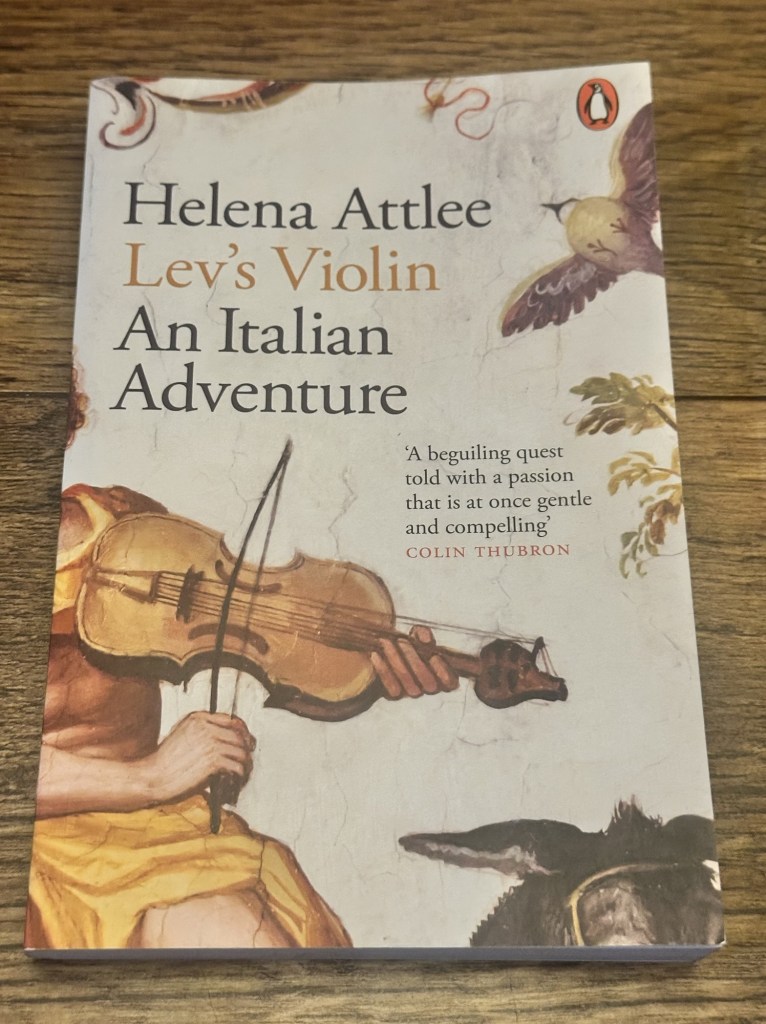
I admit to a bit of buyer’s remorse when I pulled this from a shopping bag and regarded it. What the heck had I been thinking, snaffling this when I was tone deaf and knew nothing whatsoever about violins, their creation or music as a whole (apart from what I liked the sound of)? But once again Daunt Books(yes, I bought this at the same time as Bad Habit) worked its remarkable magic. The author’s tale begins simply enough: she attends an outdoor recital of classical music. The sound of one particular violin captures both her imagination and her heart. She questions the musician, who tells her that the violin is known as “Lev’s violin” after its previous owner, and that an assessor determined that the violin was a “church violin” made in 18th century Italy. The assessor also dismissed the violin as “worthless.”
Stung that an instrument that has captivated her so should be dismissed as worthless, Atlee sets out to trace its probable history, beginning in Cremona, the home of the legendary Antonio Stradivari and still crammed full of luthiers, through the forests of Germany and Austria, where the wood for the violins was grown, sawn and transported, detouring into France and England (where many of the best known Stradivarius instruments were transported) and finally into Russia, where many Italian violins travelled along with their troupes of musicians during the early twentieth century.
Although a slim book, Atlee crams an extraordinary amount of knowledge and research into her biography of Lev’s Violin. She has lived many years in Italy and her affinity for the country and its people and language prove invaluable in her quest to find the origins of Lev’s Violin and redeem it from its original damning verdict of “worthless.” But this is not a dry, ponderous book. It is incredibly readable and allowed me a glimpse into a world – the world of music – that my lack of talent and in all honesty, my lack of interest had previously barred me from. But it’s not just about the violin. Atlee soon comes to realise that the story of the violin, both Lev’s and the violin as an instrument, is the story of countless people. Some are musicians, some are luthiers, some are foresters, some are historians, some are businessmen (or possibly conmen), and some are simple lovers of music. She brings them all into view in this remarkable work, all of them and their stories entwined by a worthless violin.
So, is Lev’s violin really worthless? In monetary terms, perhaps. You’ll have to read the book to find out. But in other ways, hell no. It gave us this wonderful work, for starters. And it taught me a new, delightful word: purfle. Go and find a dictionary. Or just read Lev’s Violin. It will be worth it.
5. Pity by Andrew McMillan
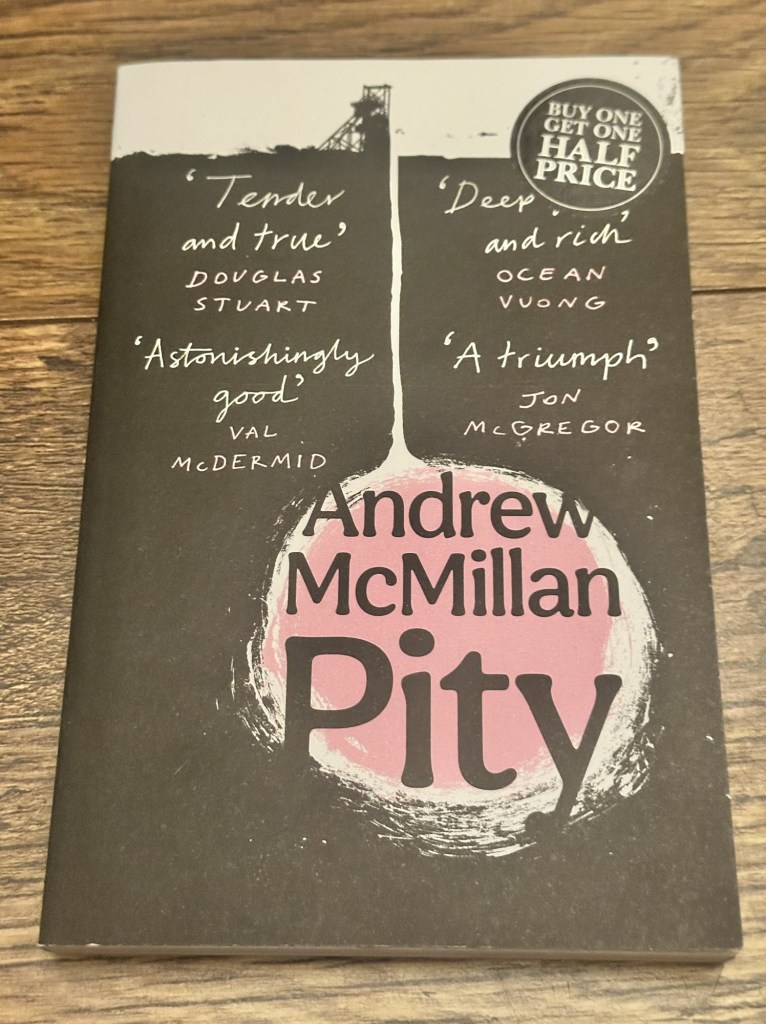
Round where I grew up, former Prime Minister Thatcher’s first name isn’t “Margaret.” It’s “fucking.” I grew up in an area that had been decimated by pit closures in the 80s and 90s, at the behest of the Conservative government of the era. Mass unemployment, civil unrest, protests, the ongoing effects of precarious, low-paid employment, the loss of identity left deep and abiding scars. The mines were a part of my family as well as thousands of others: my maternal grandfather and at least two of my uncles worked down the mines at some point in their lives.
I mention all this because it can be hard to convey all that the mines and miners meant to a mining town, and the complex, still-unfurling legacy they left. But Andrew MacMillan, a native of Barnsley, knows what it means and he has the talent to capture it in words and lay it out on the page for his readers.
Pity is a slender book. You could probably read it inside a day if you met with no interruptions. Yet MacMillan, like the other masters of the novella such as Italo Calvino, Nell Dunn and Shirley Jackson, is capable of juggling multiple themes, characters and eras in his work without ever losing the attention of his audience or sight of his story. And his language is both incandescent and economical, no word out of place. I wasn’t at all surprised to learn that the author is also a published poet. This is a poetical work, but with none of the mildness suggested by the term. This is a book that is dark and murky and hacked from the earth beneath our feet.
The simplest way of describing Pity is that it focuses on three generations of men from the same family. There is a miner, who appears only in flashback (his name is never confirmed). His sons, Alex and Brian, whose destiny down the pits was snatched from them and who have never quite managed to find another identity to inhabit. And Alex’s son Simon, the first man in his family with no direct memory of the mines. A thoroughly modern male, he makes a living onstage as a drag act and doing sex acts on OnlyFans. His partner Ryan, a security guard who occasionally participates in said sex acts, finds himself both in the eye of the camera and on the other side, watching out for wrongdoers (and men having clandestine encounters in the gents) as part of his day job. Interspersed with all this is a group of historians recording people’s memories of the mines and the industrial action, whose outsider viewpoints and consciously academic language are ludicrously far removed from the lives of the men and women they’re interviewing.
It’s hard to summarise Pity because the novel weaves together so many strands and does it so superlatively well. The love-hate relationship the town had towards the mines, like so many others, is evoked in a few blistering phrases. But what really interests MacMillan is what is buried: the mines, trauma, memory, sexuality. Pity is a queer text, focusing on both Simon and Ryan’s sometimes difficult but intense relationship and the hidden, stigmatised queer sexuality of the previous generation. Alex and Brian never went down the mines but are still in thrall to them and the very specific version of masculinity that the mines, the eighties, the working-class expected them to personify. As Brian exclaims in exasperation at one point, “people have to get on, people have to live, there’s no point digging all this up, is there?” But as MacMillan elaborates over the course of the book, nothing remains buried forever. It will either dig itself up to get you, or it will drag you down with it. But there’s a third option, the hardest one: to confront it.
MacMillan confronts what has been buried, and he does it brilliantly. I’ll leave you to find out whether his characters manage to do the same.
Well, that’s it for 2025. I’m looking forward to some new reading adventures in 2026 (and must make sure to update my reading list…) Happy New Year, dear readers!
Don’t go out alone.
 DeMonsterAting
Leave a comment