I suppose no man comes home from war. Not really.
Kong: Skull Island
Fifty years ago, the city of Saigon fell to the North Vietnamese and the Vietnam War ended. The country of Vietnam was reunified following a conflict that had lasted for decades, killed up to two million civilians and resulted in the deaths of 58,000 US servicemen.[i] For the USA, which hadn’t lost a war since its emergence from the American War of Independence, it was one of the most humiliating chapters of its history. Vietnam is still dealing with the fallout, from the after-effects of Agent Orange to the ravages on the country’s infrastructure. And the impact on popular culture is reverberating through literature, film, music and art to this day.
War films set in and during the Vietnam War were being made by American film studios even before the conflict ended, with some even following Vietnam veterans after they returned to the USA. The earliest were produced in the mid-1960s, but the most famous came in the late seventies and the eighties, when the conflict was still fresh in the cultural memory. There is The Deer Hunter (1978), Full Metal Jacket (1987), Good Morning Vietnam (1987) and the most infamous of all, Apocalypse Now (1979). The latter is based upon the novella Heart of Darkness by Joseph Conrad, first published in 1899, the story of a man named Marlow and his encounter with an immense darkness he encounters in a hitherto unexplored region of Africa. Although what this darkness consists of has been the subject of much debate, the story centres on Marlow’s fascination for a person. This is Kurtz, an ivory merchant worshipped by the native people, believed to be mad by his employers and the object of Marlow’s expedition. Tasked with retrieving (or possibly hanging) Kurtz, Marlow succeeds in his objective but is haunted by what he has seen on the journey and the writings and ramblings of Kurtz. Kurtz himself dies before the return voyage is ended, his last words being “the horror… the horror!”
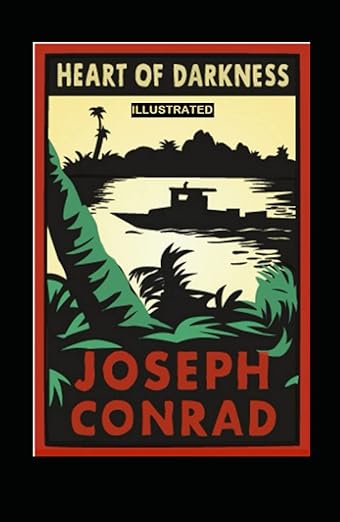
The parallels with the Vietnam War – or, indeed, with any war – are readily apparent. However, the essential simplicity of the story means parallels can be drawn with almost any ill-fated voyage. Including a pop culture text strikingly different in some respects from Vietnam War films: the story of King Kong. The original film, released in 1933, has become ingrained in our collective consciousness. The image of Kong swatting at biplanes atop the Empire State Building, with the unlucky Anne Darrow screaming her lungs out as accompaniment, has been replicated and parodied innumerable times. Both adventure and horror story, King Kong also displays some of the themes of imperialism and colonialism critiqued by Conrad in his novella. It features a crew of (white, American) adventurers blundering into an unexplored wilderness with no idea of what awaits them or how to survive it, and then they are arrogant enough to imagine they can control it – and worse, monetize it. They take Kong back to New York, reduced to a mere spectacle, a (supposedly) tamed beast to titillate audiences. It ends about as well as you’d expect.
However, the original Kong is mostly uncritical of the expedition to Skull Island, Kong’s home, and the gung-ho explorers. They’re manly, dashing and intrepid after all. The world is theirs to discover and trample over. King Kong, although possessing elements of horror, is a straightforward adventure story. And while the crew fail spectacularly to tame Kong, by the close of the film he has been safely killed off and the status quo restored.
However, more recent versions of the film are more complex. Peter Jackson’s 2005 remake is far less indulgent towards its motley crew of adventurers, who are shown early on to be ill-equipped and unprepared for what awaits them. Led by the egotistical film director Carl Denham, its crew also repeatedly express disquiet about their destination. Everyone but Denham and his potato-brained leading actor thinks the expedition is a bad idea. Such reservations are shown to be justified over the course of the film, with most of the crew being killed off in various macabre ways. Notably, the hero Jack Driscoll, instead of being the gruff, musclebound sailor of the original film, has been transformed into an intellectual playwright who was conned into making the voyage. Of Denham and his quest to commit the spectacular, the unbelievable to film, he remarks astutely, “that’s the thing you come to learn about Carl. His unfailing ability to destroy the things he loves.” Sure enough, Kong’s inevitable demise is presented as undiluted tragedy rather than a necessary evil.
But perhaps the most telling alteration in Jackson’s film is a little scene just before the crew arrives at their fateful destination. A young crewman is reading Heart of Darkness. He turns to his mentor, a veteran of the First World War, and asks “it isn’t an adventure story, is it?” The older man responds somberly “no, it isn’t.” Although they are ostensibly talking about the novella, we, the audience, know what is truly being said here.
Although it isn’t necessary to have read Heart of Darkness to understand the above scene, it is a subtle and interesting bit of foreshadowing that grows even more complex and nuanced the more Conrad’s story is compared with King Kong. There has been vigorous debate about whether Heart of Darkness upholds or criticises colonialism in Africa, about whether European civilization is contrasted with African wildness or if the novella condemns the brutality and savagery of the European colonisers. Whether it does or it doesn’t is beyond the scope of this article (if you must know, I think it’s a mixture of both) but such debate establishes ambiguity about where the darkness is centred – in Africa, in London, in the hearts of mankind? There’s a similar conundrum at the heart of Jackson’s film. It’s a period piece, set during the midst of the Great Depression, with Hooverville shanty towns contrasted with gleaming skyscrapers. Can a world that allows people to starve on the streets really be considered “civilized”?
Twelve years later, Hollywood has gone franchise-crazy, to which end new films about classic monsters such as Godzilla, and of course Kong are being made. In 2017 Kong: Skull Island was released. An entirely new story set during the closing days of the Vietnam War (and borrowing its atmosphere and aesthetics from Vietnam War films), it follows a motley bunch of soldiers, mercenaries and scientists on an expedition to the mysterious Skull Island. Once there, they rapidly manage to annoy the hell out of Kong, giant lizards called Skull Crawlers, some colossal insects and a stranded WWII pilot called Hank. Their mission – ostensibly charting the island, in reality searching for proof of gargantuan monsters – gets chucked out of the metaphorical window as their group is split up, with one segment focusing on getting the hell off the island and the other, led by the semi-deranged Colonel Packard (Samuel L. Jackson in full Ahab mode), determined to destroy Kong.
One flaw of Kong: Skull Island is that there are too many characters. Ensemble casts are all the rage at the moment (no doubt influenced by the phenomenally Marvel Cinematic Universe) but the film has too many to allow the audience to follow their narrative arcs with ease or to allow much character development. The two characters who come out best from the hodgepodge are the stranded pilot Hank (the great John C. Reilly) and ex-Special Forces soldier James (played with panache by Tom Hiddleston). Hank’s motivation is simple: get home, reunite with his wife and meet his son, who was born just before he got stranded. Hank, a tough, embattled survivor, is on intimate terms with the dangers of Skull Island and has a great respect for Kong, even to the extent of compromising his chances of escape when Kong needs his protection. James, who is equally tough and a professional cynic, has one of the best storylines, as he leaves behind his disillusionment and learns to see the wonder in the world again. Notably, these characters have, shall we say, significant surnames. Hank’s is Marlow and James’s full name is James Conrad.
Perhaps it’s a coincidence, given that none of the actors or filmmakers (to my knowledge) have ever referenced Heart of Darkness when discussing the film. But – really? The name of the author and the name of the narrator incorporated into a film about Kong? Especially since Conrad’s novella has been referenced in a previous film about Kong. In the case of Kong: Skull Island, the darkness is more easily identified. It’s not Kong, but the grotesque Skull Crawlers (Hank’s name for them). Without Kong to keep them in check, they would ravage Skull Island and devour every living thing within weeks. Although arguably not evil (they are driven by instinct, after all, rather than consciously cruelty) their gruesome appearance and insatiable appetites mark them as the antagonists. They are monstrous, both in appearance and nature.
But the darkness is not conveniently confined to the Skull Crawlers. Here we come full circle, back to the Vietnam War and back to war itself. Hence the quote from Kong: Skull Island at the start of this article. It’s a suggestive comment, that no man comes home from war. “Not really.” What Conrad is saying here, is that even if a man goes home physically from the war, he will be forever altered. In his case, that’s quite accurate. In the film’s novelisation, Conrad is revealed to be a former Special Forces soldier who was sent on a mission in Indonesia. His squad was set up to fail, and when Conrad discovered this, he lost all faith in his country and its military, hence his bitter, devil-may-care attitude at the start of the film. We also learn that his father died in WWII and literally never returned home. Hank’s story is similar: he went to war, albeit he does eventually make it back home, where despite twenty-eight years having passed, his wife is still waiting for him. However, he’s a middle-aged man. The boy he was is gone forever.
The ur-example of the effects war can have upon a man within the film, however, comes in the shape of Colonel Packard. At the outset, he is shown to be embittered over the US military’s withdrawal from Vietnam, as he can no longer function outside a conflict scenario. There is nothing for him back ‘home’ in the good old US of A, he is an eternal soldier. Hence his increasingly deranged vendetta against Kong: he has a new enemy to focus his anger and frustration on.
Kong himself is locked in combat with the Skull Crawlers. As noted, Kong is the only thing keeping the beasts in check and his kingdom in balance. In a dark aside, during one scene we espy the skeletons of what are presumably his parents. His entire family have been killed off by the Skull Crawlers, leaving him alone and profoundly lonely. “The human cost of war’”is a phrase I’ve often read in connection with Vietnam and other conflicts. Kong is not human, but he’s paid the price too. He’s fighting an endless war, with countless enemies.
The Vietnam War ended fifty years ago, in 1975… but the aftershocks are still reverberating. At the start of this article, I mentioned the war’s impact upon popular culture. By this, I meant American popular culture (I know nothing about Vietnamese popular culture and the Vietnam War seldom features in UK film or TV). In his book Warrior Dreams: Paramilitary Culture in Post-Vietnam America, James William Gibson posits that the action hero of the late seventies/early eighties (think Dirty Harry, Rambo, Charles Bronson in Death Wish) spends his time winning a war that somehow never quite ends. A vigilante rather than a member of the police force or an army unit, the action hero made up for America’s defeat in Vietnam by winning countless battles onscreen and in the pages of thriller novels, in “the private warrior’s redemption of Vietnam through new battles.”[ii] Gibson’s thesis is necessarily a bit more complex than this, but there’s no denying that he’s got a point. From the many films of Arnold Schwarzenegger to the Die Hard film franchise to the more recent Expendables movies, Vietnam (or its martial equivalent) is still being fought onscreen, and with plenty of mindless gratuitous violence for our consideration.
Kong: Skull Island is a tad more introspective than the 80s thrillers Gibson examines (not difficult, to be honest). War is not gloried in, nor is the mission’s attack on Kong presented as justified. War is a destroyer and an indiscriminate one – unlike Kong. The Vietnam War was an ugly conflict that, in many ways, is not yet resolved, either in film or real life. Heart of Darkness continues to confound its readers. And Kong? Well, we’ll no doubt have new films to pore over before long. But wherever the darkness might be found, it’s not in him or his kind. Long live the King!
Take care, dear reader. Don’t go out alone.
References
[i] ‘Bombs and bullets were like rain’: 50 years on from the fall of Saigon and the end of the Vietnam war | Vietnam | The Guardian
[ii] James William Gibson, Warrior Dreams: Paramilitary Culture in Post-Vietnam America (Hill and Wang: New York, 1994), p.28.
 DeMonsterAting
Leave a comment