I love to read, in a way that italicises the word love. There are photos of me aged two with books in the family photo albums. I was one of those kids who read under the quilt with a torch after bedtime. My reading time this year has been scarce, crammed into short evenings and snatched moments owing to my two small children, cat and having to cook and clean occasionally. Nonetheless, I have managed to read a fair few books this year, and as it seems to be the done thing at Year’s End, here are my top five books of 2024…
- Lost in the Garden by Adam S. Leslie
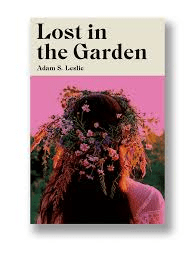
I picked this up on a whim in the Waterstones in Llandudno on our summer holiday and was amply rewarded for my caprice. Leslie’s novel is a difficult one to summarise, but the basics are thus: it’s set in an alternate version of England, where the seasons have stopped changing and an endless, sweltering summer has consumed the country. Even more eerily, the dead have risen from their graves and are roaming drearily around, attacking the living and generally being a nuisance. Against this backdrop, three young women embark on a road trip to a town called Almanby. This would be (comparatively) unremarkable, except Almanby is a forbidden place, the one place you cannot go, that no-one returns from. And it just might be the source of the eternal summer…
Leslie’s novel arguably belongs to the increasingly popular subgenre of folk horror. Broadly speaking, this genre uses elements of folklore to evoke fear and dread. Common tropes include a rural setting, isolation, and nature taking on a threatening role. Lost in the Garden incorporates all of these, and much more (the ghostly ice cream van, heard but never seen, sticks in my mind). The novel is a definite puzzle: although the malevolent nature of Almanby is gradually revealed, the reasons for its noxiousness, the perambulating dead and the everlasting summer are only ever hinted at. Instead, the story focuses on the three women – giddy Heather, deceptive Rachel and lovelorn Antonia – and their adventures. All are vividly drawn, memorable creations, delineated in fanciful but very readable prose. A frothy, whimsical novel with a jet-black heart. Think of an ice-cream cornet laced with nightshade and you’re on the right lines. Delicious!
2) The Witches of Vardo by Anya Bergman
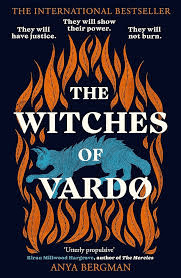
This was not a book I chose for myself. It was the last book sent to me by Daunt Books, as part of a yearlong book subscription my sister got me for last Christmas. However, Daunt Books pulled a blinder with this one: it’s fantastic. Set in seventeenth century Norway, the novel follows the trajectory of three very different women. The first is Ingeborg, resident in a tiny, remote fishing village. After her mother Zigri is widowed, she embarks on an ill-fated affair with a local merchant. When it inevitably becomes public knowledge, Zigri, who has become a profound embarrassment to the influential merchant, is sent to the forbidding and forbidden fortress at Vardo to be tried as a witch. Despite the overwhelming odds, Ingeborg sets out to save her mother with the aid of Maren, a mysterious woman with the knowledge to survive the Norwegian wilderness in the brutal winter… and not coincidentally, herself the daughter of an infamous witch.
Already at the fortress when these events occur is Anna Rhodius, a noblewoman who was once mistress to the King of Denmark, but who like Zigri has become a mortifying nuisance to the man she is desperately in love with. Exiled to Vardo, she plots to return to her privileged life at the Danish court, and it’s only a matter of time before the noblewoman, the witch’s daughter, the village girl and their respective agendas collide.
I loved, loved, loved this book. Witches are some of my favourite literary subjects, particularly when they are allowed their own voices. Bergman’s book is a fictionalised account of actual witch trials that took place in Norway in the mid-seventeenth century with the stated intention of returning agency to the accused women. Moreover, it’s a fascinating glimpse of a remote region and a little-known period of history (little-known in the UK at least). Also, it’s a bloody good read.
3) Thursbitch by Alan Garner
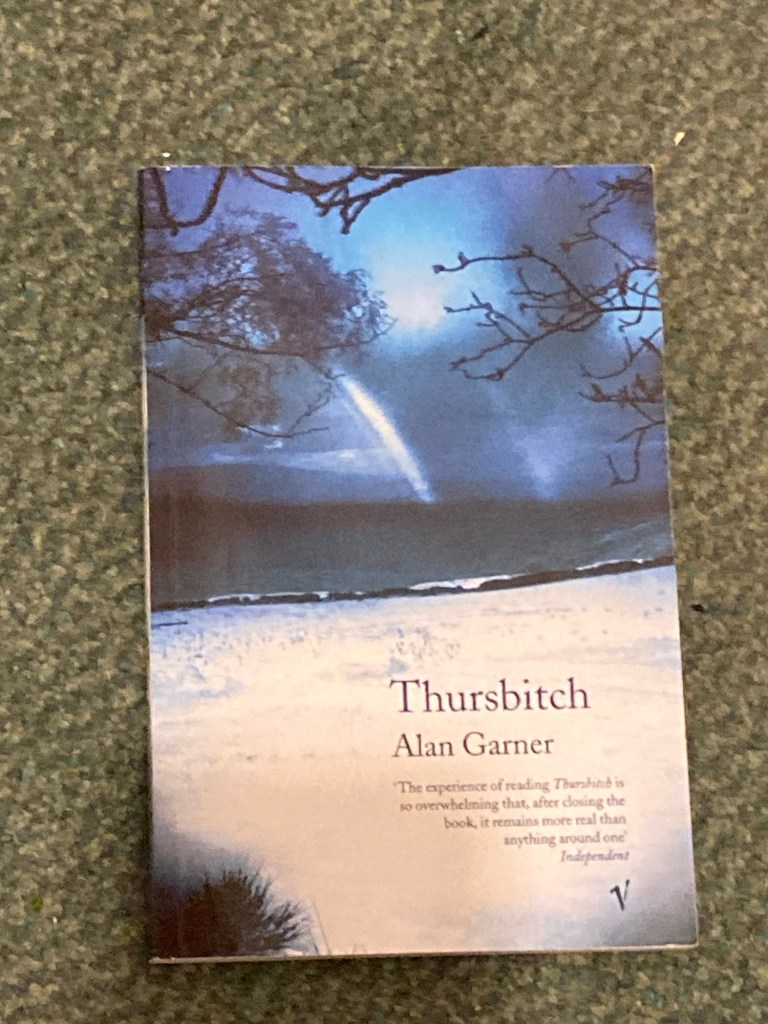
Alan Garner has long been one of British literature’s great secrets (and unfairly so) but of late he’s been receiving some much-deserved attention thanks to his Booker-nominated novel Treacle Walker. However, Thursbitch is an earlier work, first published in 2003. Like most of Garner’s novels, it is not easy to summarise, but a brief outline is thus: it opens with a death. It is the death of an eighteenth-century packman named John Turner, who was found dead of exposure with the print of a woman’s shoe crushed into the snow surrounding him. The principal plot strand focuses on Turner and the events that led up to his demise, while the subplot depicts a modern-day couple, Ian and Sal, trekking across the same landscape, the valley the novel is named for. Although separated by some two hundred and fifty years, their stories become intertwined, especially as a degenerative condition Sal suffers from progresses…
The novel is classic Garner: exploding with linguistic life, crammed full of history and mythology and biology, utterly merciless and with high expectations of its readers. Garner explains nothing: he writes his tale, and its audience must plunge into it and keep afloat as best they can. It’s a challenging read, but in a market saturated with anaemic, self-consciously clever Serious Literature (capital S, capital L) Garner’s work is a rich, bloody, vital delight.
4) Reservoir Bitches by Dahlia de la Cerda, trans. Heather Cleary and Julia Sanches
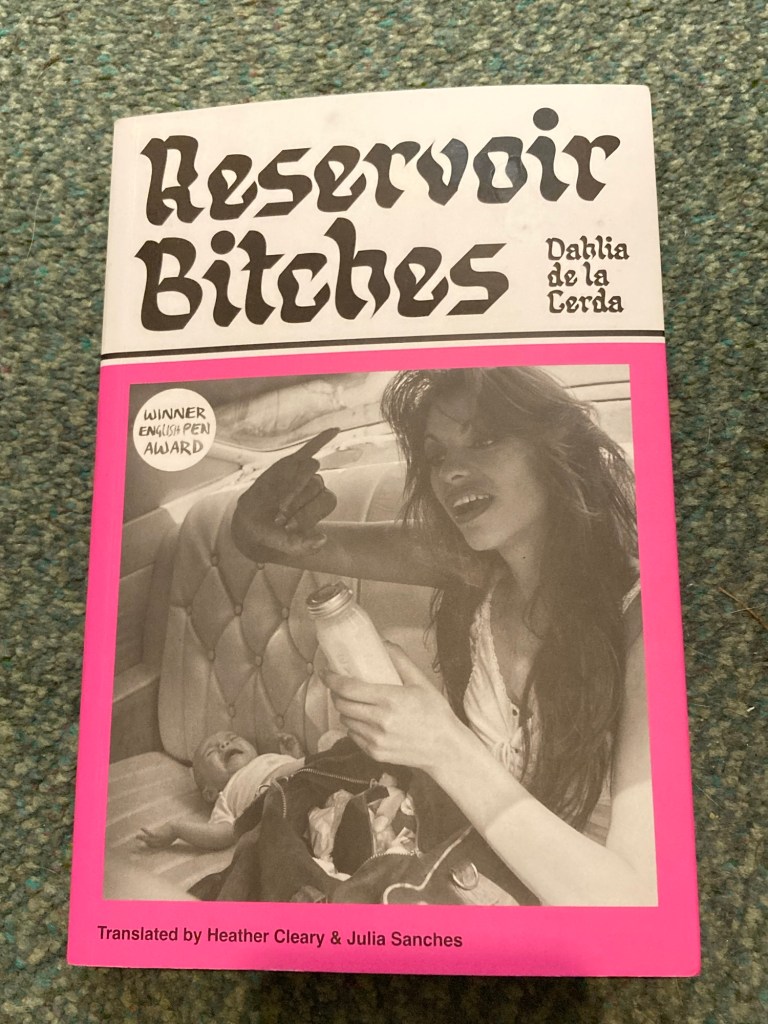
A late entry! I picked this up in Daunt Books on a brief trip to London in December, and it’s a black gem. (Side note: Daunt Books is now among my top three favourite bookshops ever). This is a short story collection rather than a novel, all of the stories centred on Mexican women, who range from teenage mothers to wives of eminent politicians to career criminals to witches. All of them are constrained by circumstance: having children ridiculously young, living in dire poverty, subject to violence. What none of them are is resigned, submissive or decorous. These women may be bloodied, but they’re vigorous, smart and more than ready for whatever else life, fate and society choose to chuck at them. It reminds me of Nell Dunn’s Up the Junction (1963) about a very different time and a different country, but about very similar poor, spirited, rebellious and sexual young women.
These stories are sensational. What I love most is how intricately crafted and technically sophisticated they are, whilst still full of energy and ferocity and romance and brutality. I’ve long been a sceptic towards stylish, cultured Serious Literature (see previous entry). What turns me off is how pretentious so much of it is: it’s so busy dealing with Important Topics and showing off how intellectual it is and how beautiful its prose is that it forgets to tell a decent story. De la Cerda is a master of her craft already, but she can’t be bothered showing off – she’s got stories to tell. And holy cream cake, they’re damn good stories too.
5) Diary of a Tuscan Bookshop by Alba Donati, trans. Elena Pala

A non-fiction entry and unlike the others, this one is anything but dark or vicious. Told in diary form, it is the day-to-day events, tribulations, and tiny triumphs in the life of a bookshop proprietor. This particular subgenre of non-fiction has been a delight ever since the publication of 84 Charing Cross Road by Helene Hanff (a true classic). But what distinguishes Donati’s memoir is the bookshop itself. Donati, a former book publicist, decided to return to her home village (population: approx. 180) and open a bookshop. Unsurprisingly, more than one person asked her if she’d lost her marbles. But once open, the bookshop’s fame spread across Tuscany and beyond, attracting villagers, tourists, friends and booklovers in general.
Donati’s work deals with serious, sometimes difficult topics – it is written under the shadow of the Covid pandemic, the bookshop catches fire – but this work is at its core an optimistic one. To read it is to be transported to her tiny Tuscan village, and her beautiful bookshop, with its remarkable selection of books, literary-inspired teas, and the people who visit it, who are just as memorable and intriguing as the books on offer. One to revisit when I want reminding that dreams do sometimes manifest themselves.
What do you think? Have I chosen well or are you quite appalled? Let me know! Till next time, dear readers.
 DeMonsterAting
Leave a comment